In the context of the recent global economic bodies entering a cycle of interest rate cuts and the "significant easing of external pressures on the basic stability of the RMB exchange rate," the monetary policy space of the People's Bank of China has begun to open up.
On the morning of September 24th, a press conference was held by the State Council Information Office, inviting the Governor of the People's Bank of China, Pan Gongsheng, the Director of the China Banking and Insurance Regulatory Commission, Li Yunze, and the Chairman of the China Securities Regulatory Commission, Wu Qing, to introduce the situation related to financial support for high-quality economic development and answer questions from journalists.
At this press conference, several major policy measures were announced: First, to lower the reserve requirement ratio and policy interest rates, and to drive down market benchmark interest rates; second, to reduce the interest rates on existing housing loans and unify the minimum down payment ratio for housing loans; third, to create new monetary policy tools to support the stable development of the stock market.
Among them, the policy measures related to the stock market have attracted market attention due to their "beyond expectations."
The specific measures include two items: The first is to create a swap facility for securities, funds, and insurance companies, supporting qualified securities, funds, and insurance companies to obtain liquidity from the central bank through asset pledge.
This policy will greatly enhance the institutions' ability to obtain funds and increase their holdings of stocks; the second is to create a special re-lending facility for stock buybacks and increases, guiding banks to provide loans to listed companies and their major shareholders to support stock buybacks and increases.
It is easy to find that "obtaining liquidity from the central bank" is the essence of the above two measures: not only can financial institutions in the stock market (securities firms, funds, insurance companies) "obtain liquidity from the central bank," but listed companies and their major shareholders in the stock market can also "obtain liquidity from the central bank."
Moreover, it is clear that this "liquidity" can only be used to "go long."
Pan Gongsheng also made it clear: "This is the first time the People's Bank has innovated structural monetary policy tools to support the capital market."
In response to questions from journalists, Pan Gongsheng also clearly expressed the possible fund allocation arrangements for the above two measures.
Regarding the first tool, that is, the swap facility for securities, funds, and insurance companies, the planned first-phase operation scale is 500 billion yuan, which can be expanded in the future depending on the situation.
"As long as this thing is done well, the first phase of 500 billion yuan, you can also get another 500 billion yuan, and you can even get a third 500 billion yuan, I think it's all possible, it's open."
Pan Gongsheng also emphasized that "the funds obtained through this tool can only be used to invest in the stock market."
Regarding the second tool, that is, the special re-lending facility for stock buybacks and increases, the first phase of the quota is 300 billion yuan.
If used well, "you can get another 300 billion yuan, and you can even get a third 300 billion yuan, it's all possible."
Moreover, this tool "does not distinguish between ownership systems" and is applicable to listed companies with different ownership systems such as state-owned enterprises, private enterprises, and mixed-ownership enterprises.
As for the interest rate aspect, Pan Gongsheng said: "The central bank will issue re-lending to commercial banks, and the proportion of funds supported is 100%, the re-lending interest rate is 1.75%, and the loan interest rate issued by commercial banks to customers is around 2.25%, which can be increased by 0.5 percentage points, and the interest rate level of 2.25% is also very low now."
In addition, according to the information of the press conference, in terms of long-term funds entering the market, the "Guiding Opinions on Promoting Long-term Funds into the Market" will be released in the near future to further unblock the pain points and blockages of long-term funds entering the market.
The specific measures include: First, vigorously develop equity-based public funds and promote the innovation of index products such as broad-based ETFs; second, improve the institutional environment for "long money for long investment," increase regulatory tolerance for long-term funds' equity investment, implement long-term assessment, unblock the institutional barriers affecting long-term investment of insurance funds, and guide the multi-level, multi-pillar pension security system to interact positively with the capital market; third, continuously improve the capital market ecology, improve the supporting institutional arrangements for institutional investors to participate in the governance of listed companies, and severely crack down on various illegal and irregular behaviors.
In the author's view, the above measures related to the stock market can be summarized as: the central bank's liquidity is accelerated into the stock market + driving long-term funds from outside the market.
Especially "the central bank's liquidity is accelerated into the stock market," which is of historical significance.
As far as the author knows, in the development process of the A-share market over the past 30 years, the practice of directly linking the liquidity provided by the central bank and the stock market is rare, and the policy level's related statements are usually more restrained and vague.
But this time, the clarity of Governor Pan Gongsheng's expression on the central bank's support for the stock market is unprecedented: not only did he create structural monetary policy tools specifically to support the stock market for the first time, but he also clearly stated that the first batch of plans for the two tools reached 800 billion yuan.
Moreover, as he said, this quota is open, depending on the situation, the second batch, the third batch...
The author believes that investors should pay enough attention to this policy signal, because the market will always move in the direction of the least resistance.
And the press conference on September 24th is to tell the market: the resistance to continue moving down is very large, especially when the central bank enters the market "one man stands in the pass."
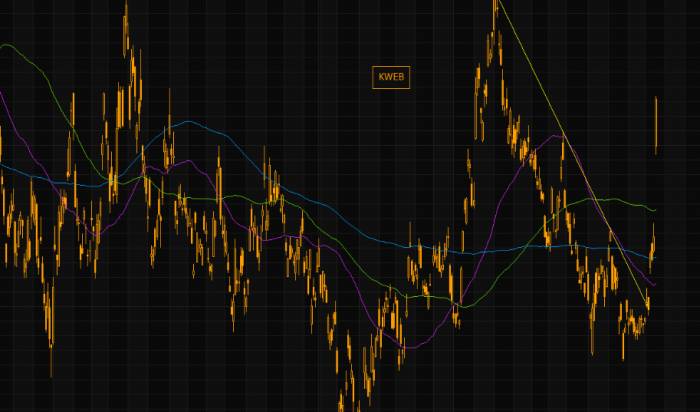
Perhaps the market performance on September 24th itself is the answer: that day, the Shanghai Composite Index rose by 4.15%, the CSI 300 Index rose by 4.33%, the GEM Index rose by 5.54%, and the National Index A rose by 4.05%.
The A-share market is likely to remember this day forever: a miracle day.





























Share Your Comment
We'd love to hear about your experiences and questions