Who could have imagined that, after several trading days following the Federal Reserve's interest rate cut, gold has emerged as the biggest winner, which in itself is sending an indescribable risk signal.
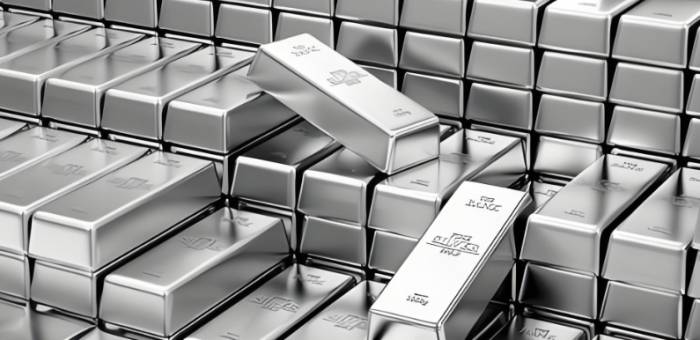
Amid global macroeconomic uncertainty and a backdrop of loose monetary policy, the international gold price has broken through $2,627 per ounce, setting a new historical high.
As a safe-haven asset, gold has once again proved its unique position and appeal in times of financial turmoil and during periods of monetary easing.
Do you remember what day it was?
After the Fed started the easing cycle, the market was in a state of mixed emotions that day: U.S. stocks rose and then fell, gold turned from rising to falling, and U.S. Treasury yields turned from falling to rising.
On September 18th, Eastern Time, the Federal Reserve made the decision to cut interest rates for the first time in four years at its interest rate meeting, reducing the target range of the federal funds rate from 5.25% to 5.50% to 4.75% to 5.00%.
This move was in line with market expectations, but the global financial market seemed confused.
In his speech after the meeting, Federal Reserve Chairman Powell, while emphasizing the flexibility of monetary policy, always maintained a "taichi" stance - neither committing to a continuous rate cut in the future, nor excluding the possibility of adjusting policy at any time.
The global financial market after the Fed's rate cut seems to be looking for direction, but in the differentiation of ups and downs, international gold stands out.
The market performance three days after the Fed's rate cut: the first day: the global market opened high and closed low.
After the Fed cut rates by 50 basis points, the market initially reacted positively, especially U.S. stocks briefly rose after the opening.
However, as Fed Chairman Powell emphasized that this rate cut was "preventive" rather than "long-term easing," investors began to have uncertainty about the future rate cut path, leading to the stock market falling from its high point.
The S&P 500 and Nasdaq indexes fell slightly, and the market's pressure to take profits also became apparent.
The second day: the global market rose across the board.
The day after the rate cut, the global market rebounded across the board, especially in Asian stocks.
The Hang Seng Index rose by 1.36%, and the Nikkei 225 index rose by 1.53%.
This reflects investors' improved expectations for global economic growth after the Fed's rate cut.
At the same time, safe-haven assets such as gold rose sharply, showing that the market's confidence in global liquidity easing has increased.
The third day: the market differentiated, and some pulled back.
U.S. stocks performed differently, with the Dow Jones index rising slightly by 0.09%, but the Nasdaq index fell by 0.36%, reflecting investors' cautious sentiment towards the high valuation of technology stocks.
The European market saw a more obvious pullback, with the German DAX index and the French CAC index falling by 1.49% and 1.51% respectively.
At the same time, gold prices continued to rise, reaching a historical high of $2,620 per ounce, showing strong demand for safe havens.
What's next?
This is actually a complex issue that still depends on the performance of economic data and the evolution of market sentiment.
Barclays Bank believes that the Fed's 50 basis point rate cut exceeded market expectations, but the Fed still maintained a relatively hawkish stance, implying that unless economic data significantly deteriorates, it will not take further radical rate-cutting measures.
Barclays Bank analysis says that this 50 basis point rate cut is described as a "re-calibration," bringing interest rates closer to a neutral level, but it does not mean that a rapid rate-cutting cycle is about to begin.
It is expected that the Fed may have two more 25 basis point rate cuts in 2024 and may cut rates three more times in 2025.
Looking at emerging markets, Barclays Bank believes that countries such as India and Indonesia have benefited from the increase in global liquidity, and capital inflows have strengthened.
It is worth mentioning that the U.S. dollar performed strongly, and Barclays Bank explained that this is because the Fed implied that the future rate cut will be more limited.
The overall performance of emerging market currencies was stable, but some countries performed well, such as Mexico, which performed well due to its strong trade relations with the United States, while some countries dependent on commodity exports were affected by falling commodity prices.
Central banks in emerging markets may delay rate cuts at this stage, waiting for more signs of domestic economic stability.
Gold?
Gold!
On September 23, the international gold price rose again to $2,627.60 per ounce during the trading day.
Behind this is the market's high consensus on the news of the Fed's 50 basis point rate cut.
Although the stock market and bond market's reactions were somewhat differentiated, gold has seen a strong rise.
The liquidity easing brought about by the rate cut, coupled with global economic uncertainty, has provided a strong upward momentum for gold.
Gold's safe-haven characteristics have been demonstrated once again.
When interest rates fall, as an interest-free asset, the opportunity cost of gold correspondingly decreases.
Therefore, during the rate-cutting cycle, gold often becomes the first choice for risk-averse funds.
As the U.S. dollar interest rate is lowered, global investors flock to the gold market to seek capital preservation and risk aversion.
In addition, as geopolitical tensions intensify, especially the escalation of conflicts in the Middle East, the demand for gold as a safe haven is further strengthened.
Although the Fed stated that the rate cut is to prevent an economic recession, the global economic outlook is still full of uncertainties.
Factors such as slowing inflation and weak economic growth have intensified investors' concerns about the future economic trend.
After the rate cut, stock market volatility intensified, and the market's hidden worries about a recession have prompted funds to flow out of high-risk assets and into gold, a relatively safe haven.
Reviewing the performance of assets in previous rate cuts may reveal why gold has taken the lead.
According to Ping An Securities' report, looking at the seven rate-cutting cycles from 1982 to 2019, gold's performance in each cycle was different, but in several key rate-cutting cycles, gold was undoubtedly one of the biggest beneficiaries.
Ping An Securities' Chief Economist Zhong Zhengsheng believes that in the seven rounds of rate-cutting cycles, the U.S. economy encountered a "hard landing" three times and achieved a "soft landing" four times.
The probability of gold rising before the rate cut is relatively large, but the trend after the rate cut is unclear; while the probability of oil falling after the rate cut is relatively high, but not absolute.
Based on the economic performance before the rate cut, Ping An Securities believes it is difficult to judge whether the U.S. economy can achieve a "soft landing" smoothly.
In addition, if there is no severe economic or financial market shock in the future, this round of rate-cutting cycles is more likely to achieve a "soft landing."
Ping An Securities believes that the rate cut during the 2007-2008 subprime crisis had the most significant impact on the asset market, especially gold and U.S. Treasury bonds performed strongly under the drive of risk aversion.
This rate cut is similar to that of 2007-2008, and the global macroeconomic outlook is still unclear, and gold has once again taken the lead as a safe-haven asset.
Looking back at the performance of gold in the first half of the year, central banks around the world are still continuing to increase their holdings of gold, and the holdings of gold ETFs (Exchange-Traded Funds) are also continuing to grow.
Data shows that in the first half of 2024, central banks around the world bought a large amount of gold, setting a historical record of 483 tons.
Although the purchase in the second quarter slowed down, the overall demand is still strong.
Especially emerging market countries such as China, Turkey, and India have become the biggest buyers.
China increased its holdings by nearly 30 tons of gold in the first half of the year, and Turkey bought 45 tons of gold, becoming the biggest buyer in the first half of the year.
At the same time, the holdings of the world's largest gold ETF - SPDR Gold Shares (GLD) have increased significantly in 2024, reflecting that global investors have entered the gold market through financial instruments to hedge against macroeconomic uncertainty.
Why is it gold?
Why did gold soar after the Fed's rate cut?
Market analysis shows that one of the reasons is that the Fed's rate cut of 50 basis points has reduced the yield on risk-free assets, thereby weakening the attractiveness of the U.S. dollar.
For gold, this means an increase in relative returns.
At the same time, the weakening of the U.S. dollar has further pushed up the price of gold priced in U.S. dollars.
Although the U.S. dollar index is still strong, the market's expectation that the Fed may further loosen has given gold more room to rise.
The second is the alleviation of inflation expectations.
Although the Fed emphasized in this rate cut that inflation risks have eased, the market's concerns about future inflation trends have not completely dissipated.
As a hedge against inflation, gold continues to attract investors' funds.
In addition, the intensification of geopolitical risks is also an important factor driving the rise of gold.
The tense situation in the Middle East has increased the demand for gold as a safe haven.
Similar to the historical gold rise cycle, geopolitical uncertainty often provides strong support for gold prices.
This Fed rate cut coincides with the complex global situation, especially the increase in geopolitical risks, which further enhances the attractiveness of gold.
Louise Street, a senior market analyst at the World Gold Council, commented that the continuous rise of gold prices and the creation of historical highs have become headline news because the strong demand for gold prices from central banks and the over-the-counter market has supported the gold prices, and this trend has continued throughout the year.
Institutional investors, high-net-worth investors, and family offices favor the over-the-counter market, and they turn to gold to achieve portfolio diversification.
On the other hand, in the last quarter, as gold prices continued to set new highs, jewelry demand has declined, which has also prompted some retail investors to take profits.
What's next, will gold continue to rise?
The answer lies in two aspects: one depends on the possibility of further easing by the Fed, or the Fed's rate-cutting path, but this also depends on the performance of economic data; the other depends on the changes in the international situation.
The market generally believes that although the Fed has indicated that it will not immediately start a large-scale rate-cutting cycle this time, if future economic data continues to deteriorate, especially if employment and economic growth data are not good, the Fed may cut rates again in the next few months.
The market's expectation of future rate cuts is still high, and the trend of global liquidity easing has not changed, which will continue to support gold prices.
In addition to the Fed's monetary policy, the uncertainty of the global macroeconomic environment remains high.
Especially in the context of the Middle East situation not easing, the European economy being weak, and the global supply chain risk increasing, gold as a safe-haven asset will continue to be favored by investors.Looking ahead, Louise Street believes that the key question lies in: what factors will act as catalysts to push gold into a central role in investment strategies?
With the long-awaited interest rate cut by the Federal Reserve, Western investors have reignited their interest in gold, leading to an increase in inflows into gold ETFs.
The revival of investment from this group could potentially change the demand dynamics in the second half of 2024.
In India, the recently announced reduction in import tariffs is expected to create favorable conditions for gold demand, as high prices have deterred consumer purchases.
Louise Street stated that despite potential headwinds for the gold market in the future, the changes occurring in the global market should support and boost demand for gold.
The recovery of Western investment funds could balance weaker consumer demand and the trend of potentially slowing central bank purchases (compared to 2023).
The outlook for central bank gold demand remains optimistic.
A recent survey by the World Gold Council showed that 81% of respondents expect an increase in global central bank gold holdings over the next 12 months, with 29% expecting an increase in their institution's gold reserves.
Based on the situation in the first half of this year and the survey results, the World Gold Council anticipates that central banks will continue to be significant net buyers in 2024.
Regarding the Federal Reserve's future interest rate cut path, Barclays predicts that the Federal Reserve may adopt further modest rate cuts based on economic data performance, but the likelihood of significant cuts is low.
The market needs to continue to monitor economic growth and inflation data.
In the future, as the Federal Reserve may further cut interest rates and global economic uncertainty continues to ferment, can gold continue to be strong and become the "hard currency" for investors in an uncertain environment?
The market is watching.





















Share Your Comment
We'd love to hear about your experiences and questions