After a massive round of interest rate hikes, although the inflation of many economies has not yet fallen back to the target range, it has clearly retreated from its high levels.
"So far, the goal is approaching."
—— Despite repeated market turmoil, the Bank for International Settlements (BIS) still concludes the global economy with this sentence.
A year ago, against the backdrop of the Federal Reserve's aggressive rate hikes, Silicon Valley Bank collapsed within 44 hours, and the "century-old shop" —— Credit Suisse was merged by UBS.
Not only that, due to the rise in the cost of the US dollar, many emerging market countries also face the risks of currency devaluation, high foreign debt, and capital outflows.
At the beginning of August, another risk approached: affected by the unwinding of yen carry trades, the stock markets in Japan and other Asia-Pacific regions set the largest drop in history, and the market experienced a "Black Monday."
However, the worst worries did not come true after all, and the global economy gradually got rid of the impact of the pandemic and the Russia-Ukraine conflict.
With the recovery of the supply chain and the warming of demand, market sentiment began to improve.
In the view of Zhang Tao, the Chief Representative of the Asia-Pacific region of the BIS, the scene of the plane's emergency landing can outline the global economic trend to a certain extent.
Compared with a "hard landing," the probability of a "soft landing" for the global economy is greater.
"The reason behind this is that inflation is approaching the goals of central banks around the world, and the economic and financial systems of various countries have shown strong resilience."
He said in an exclusive interview with "Finance and Economics."
Before the plane finally lands, no one can be 100% sure of the final outcome.
In this regard, Zhang Tao frankly said that the challenge of fighting inflation in the "last mile" is still severe, and the central bank's task of restoring price stability has not been completed.
In addition, the risks faced by the global financial system have not disappeared, and the fragile fiscal situation and weak productivity growth will add more gloom to the global economy.
Since September 2022, Zhang Tao, the former deputy governor of the People's Bank of China, has been appointed as the Chief Representative of the Asia-Pacific region of the BIS, based in Hong Kong, and is the first Chinese to serve as a member of the management team at the BIS.
From 2016 to 2021, Zhang Tao served as the Vice President of the International Monetary Fund (IMF).
He has rich experience in policy formulation at both the national and international levels, involving financial stability policies, financial technology, and green finance, among other aspects.
The BIS is known as the "central bank of central banks," and its purpose is to promote cooperation among central banks and facilitate international financial business.
It is a "club" for central bank governors to meet, and the governors hold regular meetings at its headquarters in Basel, Switzerland, to discuss and exchange on global economic and financial situations, monetary policy frameworks, and the resilience of various countries' economies.
Faced with the current economic situation, Zhang Tao said that the macroeconomic policies adopted by governments around the world should be a combination of punches, and only when monetary, fiscal, cross-border capital flow, and macro and micro-prudential policies are coordinated can the economy be in a stable range.
In addition, in the long term, countries should also focus on promoting structural reforms to promote sustainable economic growth.
From a scientific and technological perspective, artificial intelligence is sweeping the world and has already set off a gold rush in the economic field.
In this regard, Zhang Tao believes that regulators, financial institutions, and ordinary users can all become observers, perceivers, and users of artificial intelligence.
Technological innovation has brought greater room for improvement to the global financial system such as cross-border payments.
This is also the core view of the BIS in the 2024 annual economic report.
"There is no doubt that (stabilizing the economy) is a difficult task, which requires a long-term vision, courage, and perseverance.
In the era of artificial intelligence, central banks need to work together more, share knowledge, data, best practices, and related tools."
The institution wrote.
Global economic risk points "Finance and Economics": Central banks in many countries around the world have already started or are about to start the process of interest rate cuts.
In your view, how likely is the global economy to fall into a recession?
Zhang Tao: When encountering an emergency landing, the plane will encounter a "soft landing" or a "hard landing."
Looking at the current economic situation, the possibility of a "soft landing" for the global economy is greater.
Its characteristics are that after a large-scale interest rate hike, although the inflation of many economies has not yet fallen back to the target range, it has clearly retreated from its high levels.
In this process, most economies have not experienced large-scale economic recessions or unemployment, while maintaining basic financial stability.
The reason behind this is that before the rate hike and balance sheet reduction, central banks of various countries have taken relatively consistent early warning measures, allowing the market to be prepared.
In addition, when financial institutions such as Silicon Valley Bank and Credit Suisse encountered crises, regulatory authorities in various countries also took timely response measures, preventing the global financial market from generating systemic risks.
"Finance and Economics": The BIS report states that although the global economy has stabilized, inflation is still a pressure point.
How great is the risk of high inflation recurring in the future?
Zhang Tao: The global anti-inflation is still "the last mile," and whether high inflation will recur is highly uncertain.
Its performance is that the relative adjustment of prices in various countries has not been fully in place, and there are still upward risks in commodity prices and wages.
First, the relative price adjustment of core goods and services has not been in place.
Decades before the pandemic, service prices exceeded core goods prices.
However, the pandemic caused changes in demand, leading to a significant increase in commodity prices.
With the alleviation of supply chain disruption issues and the decline in commodity prices, this issue has cooled down to some extent, but currently, the relative prices of services and goods in most economies are still lower than before the pandemic.
Second, the adjustment between real wages and the prices of consumer goods and services has not been in place, and real wages have not yet returned to the pre-pandemic level.
The current labor market is strong, leading to a continuous increase in labor wage demand that exceeds productivity, and real wages may continue to rise, especially in areas where wage negotiations are more concentrated.
After the supply chain issues are gradually alleviated, whether inflation will recur in the future requires more attention to changes in demand.
In the short and medium term, the level of interest rates in Europe and the United States in this round has reached its peak, and whether changes in interest rates will change the consumption behavior of the private sector, and whether companies will repair their balance sheets, still needs to be observed.
In the long term, if technological progress increases the total demand in the market, inflation may also rise as a result.
"Finance and Economics": The BIS also said that debt is another major pressure point for the global economy.
What is your view?
Zhang Tao: First, under the burden of high debt, high interest rates may bring debt risks to many countries in Europe and America.
Before the pandemic, developed countries maintained a low interest rate level for a long time, and the scale of government and corporate borrowing was relatively large.
To deal with the economic problems brought by the pandemic and considering the needs of green transformation and pensions, countries also increased fiscal expenditure during the pandemic.
After the pandemic, to deal with inflation, countries have raised interest rates one after another, which has increased the debt burden of governments and enterprises, leading to debt pressure.
Second, the continued expansionary fiscal policy may also over-stimulate demand, causing inflation to soar again, which will complicate the inflation problem in the "last mile."
The year 2024 is a global election year, and the possibility of this risk occurring is higher.
In addition, the issue of fiscal sustainability affects the financial stability of many countries.
The BIS has warned in its 2024 annual report that the rising debt level may cause governments in various countries to face crises similar to what the UK encountered in 2022.
At that time, investors suddenly avoided UK government bonds, leading to a significant increase in borrowing costs, a devaluation of the pound, and a significant decline in the stock market.
Macroeconomic policy combination punch "Finance and Economics": In response to the current global pattern of "high inflation, high interest rates, high debt, low growth," what kind of macroeconomic policy should governments adopt?
Zhang Tao: Macroeconomic policy should be a combination of punches.
In terms of the two most important policies, monetary policy should be coordinated with fiscal policy.
If there is a large divergence, the effectiveness of both policies will be discounted, and even unsustainable.
As the BIS stated, fiscal policy affects financial conditions through bond issuance.
Public debt not only affects the operation of the financial system and asset pricing but also has a profound impact on the yield curve, other asset prices, and exchange rates.
When the soundness of fiscal policy is questioned, the soundness of the financial system will also be affected.
In turn, monetary policy will affect the public fiscal situation.
On the one hand, it directly affects the public fiscal situation by setting interest rates (borrowing costs) and affecting exchange rates (when debt is denominated in foreign currencies); on the other hand, it indirectly affects the public fiscal situation by affecting economic activity and more general inflation, thereby affecting government spending and taxation.
In addition, the macroeconomic policies of governments should also be coordinated with macro-prudential policies, micro-prudential policies, capital flow management policies, and foreign exchange policies.
No policy should be allowed to be in an unsustainable position, thereby ensuring that the economy operates within a stable range.
In the long term, governments should also adopt structural reforms, which will be beneficial to improve a country's productivity and promote long-term sustainable economic growth, and also help to alleviate some of the pressure points in the economy and policy.
"Finance and Economics": At present, the price levels of various countries around the world are different, some countries have high inflation, and some countries have lower price levels.
How should central banks in various countries respond to price challenges and strengthen policy coordination?
Zhang Tao: Just looking at the Asia-Pacific region, the division of price levels in different countries is very obvious.
Although Australia's Consumer Price Index (CPI) has fallen from a peak of nearly 8%, it is still higher than 3%, indicating that its inflation pressure is relatively large.
Japan, which has been in a state of low prices for a long time, is gradually moving out of deflation, but due to its monetary policy being in the adjustment stage, the yen exchange rate is also experiencing a period of fluctuation.
The prices in countries such as China and Thailand are still lower than their target levels.
Different countries should adopt corresponding policies according to their national conditions.
Overall, the monetary policies of central banks in various countries should not be too far from their set targets.
For issues such as prices, it is undesirable to deviate too much from the target level, either too high or too low.
If the deviation is too far and not corrected in time, the future adjustment may pay a greater price.Here is the translation of the provided text into English: From the perspective of policy coordination among countries, each country's monetary policy is primarily based on its own needs, and their monetary policies should not be completely uniform.
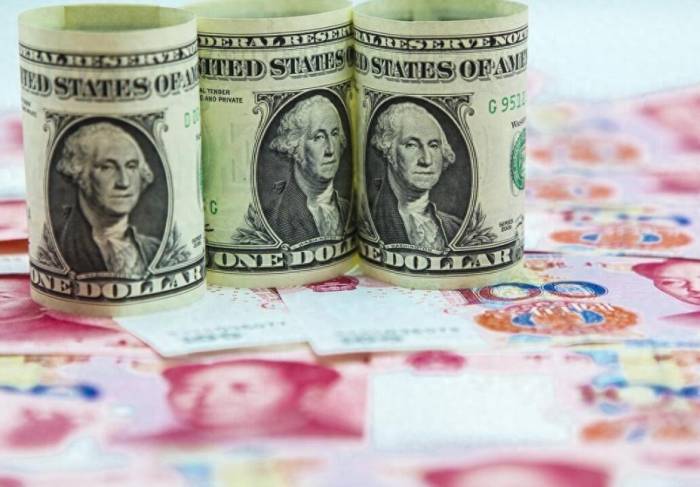
Under the dollar system, the spillover effect of the Federal Reserve's monetary policy is strong, and emerging economies should closely monitor its movements.
"Finance and Economics": Due to the large-scale interest rate hikes taken by the Federal Reserve, U.S. Treasury yields are high.
How should other central banks balance maintaining the independence of monetary policy and stabilizing exchange rates?
Zhang Tao: In the past two years, Asian currencies have been under pressure, but the risks are not as severe as the 1997 Asian financial crisis.
The reason is that compared to more than 20 years ago, the economic fundamentals of Asian countries are relatively better now, with higher economic growth rates and more balanced industrial structures.
Based on the lessons learned from the Asian financial crisis, many Asian economies have adjusted or improved their monetary policy frameworks.
The monetary policies of many countries have adopted flexible inflation targeting systems, supplemented by macro and micro financial prudential policies.
The significance behind this is that these countries have more flexible exchange rate regimes, which helps to maintain financial stability.
In addition, many countries have also included cross-border capital flow management and foreign exchange intervention in their policy toolkits for timely use.
The above factors have helped central banks of various countries to have more energy and space to deal with domestic affairs, thereby strengthening the independence of monetary policy.
Against the backdrop of a strong dollar and high U.S. Treasury rates, countries with weak economic fundamentals and less experience in dealing with capital outflows face greater pressure for currency devaluation.
It is worth noting that in terms of stabilizing exchange rates, the means of central banks' intervention in the foreign exchange market vary from country to country.
However, each intervention method has its limitations, as the saying goes, "All medicines have three parts poison."
Moreover, in the current high-interest-rate environment, the cost of intervening in the foreign exchange market will also increase.
The Value of Multilateral Central Bank Digital Currency Bridge "Finance and Economics": The multilateral central bank digital currency bridge (mBridge) project led by the Bank for International Settlements has entered the Minimum Viable Product (MVP) stage.
How far is it from official use?
Compared to other cross-border payment systems, it is generally believed that mBridge can reduce transaction costs and shorten transaction times, with stability, inclusiveness, and network effects.
What characteristics of mBridge does this reflect?
Zhang Tao: Through the mBridge project, we are exploring how central banks and commercial banks can share a multilateral central bank digital currency platform to improve the efficiency of cross-border payments.
The foundation of this platform is a distributed ledger, which can support instant cross-border payments and settlements.
At the same time, the platform can also be connected with existing domestic payment systems.
This includes not only traditional payment systems, such as Real-Time Gross Settlement Systems (RTGS), but also some new payment systems that use central bank digital currencies.
In the mBridge project, any commercial bank on the platform can use the central bank digital currency issued by the participating central banks to achieve direct connection and realize instant settlement of cross-border payments and foreign exchange transactions with the support of the central bank.
As a result, participating commercial banks in transactions can reduce the demand for intermediary services, thereby reducing repetitive compliance operations, and their transactions become faster, safer, more convenient, and more affordable, which is particularly important for emerging markets.
In the MVP stage, with a limited number of participants and functional applications, the mBridge platform can achieve actual value transactions and invite market participants to propose new plans and cases.
In addition, the platform will also improve compliance efficiency through digital identity and other means.
The MVP stage will last until 2026.
Emerging market countries are very interested in this project.
However, it is still too early to discuss the next stage.
"Finance and Economics": The continuous advancement of the central bank mBridge project will have what impact on the internationalization of participating parties' local currencies and the international payment system?
Zhang Tao: Whether a country's currency can become an international currency or an international reserve currency mainly depends on other factors.
For example, the openness of the economy, the depth, breadth, and activity of the financial market, and the acceptance of its currency in the international market.
If the internationalization of the local currency has made progress, then any improvement in the cross-border payment system will also have a further role to play.
In terms of the impact on the global payment system, an example may make it clearer.
For example, if you want to build a bridge between the two sides of a river.
If there is no demand for people to come and go between the two sides, then the significance of this bridge is not great.
However, if there is a strong desire for people to come and go between the two sides, then building this bridge is necessary.
Moreover, we can also imagine building several bridges to compare which bridge is faster, has more traffic, and is safer.
The global payment system is also a process of continuous improvement.
Any improvement to this system is based on legal compliance, pursuing how to provide better services to consumers at the lowest cost.
In other words, it is to enable consumers to transfer money from one place to another at a cheaper price, faster speed, and in a more stable and secure manner in compliance with regulations.
The current technological progress has made it possible for the global payment system to have more room for improvement and improvement.
"Finance and Economics": What requirements does artificial intelligence pose for financial supervision?
Zhang Tao: In the financial market, generative artificial intelligence combined with big data will improve economic forecasting.
Based on information from social media or financial statements, an emotion index about the economy can be constructed.
Machine learning models can also analyze transaction-level data between households and businesses and payment data between businesses to improve real-time forecasts of consumption and investment.
In the regulatory field, combined with rich data, artificial intelligence technology can assist in establishing early warning indicators to alert regulators to stress points related to systemic risks.
In addition, central banks of various countries also need to improve their understanding and application level in the field of artificial intelligence, while strengthening cooperation and sharing knowledge, data, best practices, and artificial intelligence tools.
























Share Your Comment
We'd love to hear about your experiences and questions