Let's cut through the noise. Headlines shout about China's economic slowdown, but they often miss the tangled web of reasons behind it. Having followed this economy closely for years, I've seen cycles come and go. This feels different. It's not just one thing—it's a perfect storm of structural cracks, policy choices, and a world that's no longer playing by the old rules. The struggle is real, and it's reshaping everything from global supply chains to the savings of ordinary Chinese families.
What You'll Find Inside
How Did We Get Here? The Build-UpThe Property Sector: From Engine to AnchorThe Consumer ConundrumExternal Headwinds and Internal ShiftsWhat's the Path Forward?Your Questions, AnsweredHow Did We Get Here? The Build-Up
To understand the present struggle, you have to look at the past two decades. China's growth model was spectacularly effective, but it planted the seeds for today's challenges. It was built on a simple, powerful formula: massive investment in infrastructure and property, fueled by relentless debt. Local governments sold land to developers, used the cash to build roads and airports, and the construction boom lifted GDP numbers like clockwork.It worked. Poverty plunged. Cities sprouted skylines overnight. But the reliance on debt-fueled investment created imbalances everyone saw but few dared to seriously correct. The property sector ballooned to an estimated 25-30% of GDP. Corporate debt, especially in state-owned enterprises, soared. The economy became hooked on building things, sometimes things nobody needed.
Here's the thing most analysts outside China miss: the slowdown isn't a surprise to policymakers. It's the painful, deliberate outcome of trying to wean the economy off its debt addiction. The "Three Red Lines" policy in 2020 that triggered the property crisis wasn't an accident; it was a calculated risk to force deleveraging. The struggle is, in part, a managed one.
The global financial crisis and then the pandemic led to even more stimulus, papering over the cracks. When the music finally started to slow, the structural weaknesses were laid bare. It wasn't a sudden collapse, but a gradual deflation of the biggest credit bubble in modern history.
The Property Sector: From Engine to Anchor
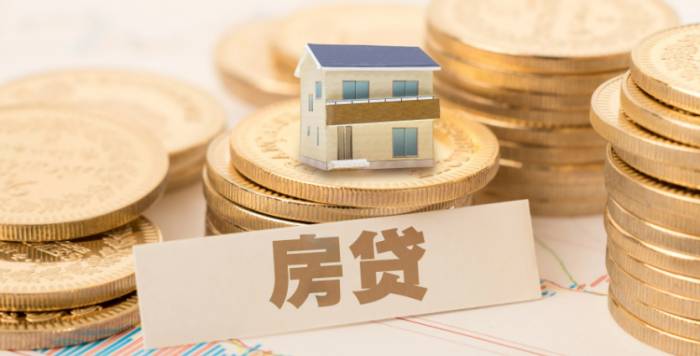
If there's one single factor dominating China's economic struggle, it's the property market. For millions of Chinese, property wasn't just a home; it was the primary store of wealth, accounting for roughly 70% of household assets. The sector was a jobs machine, driving demand for steel, cement, appliances, and furniture.
Then it imploded. The trigger was the "Three Red Lines" policy, which restricted borrowing for over-leveraged developers. Giants like Evergrande and Country Garden, which had expanded aggressively for years, found themselves unable to roll over debt. Pre-sales of unfinished apartments—a core funding model—dried up as buyer confidence evaporated.
The ripple effect is brutal. Falling property prices mean household wealth shrinks, so people spend less. Local governments lose a crucial source of revenue from land sales, crippling their ability to fund services and infrastructure. Construction jobs vanish. Banks sit on piles of bad loans, making them hesitant to lend to anyone, even healthy businesses. One sector's crisis has infected the entire economic body.
I've spoken to mid-level managers in Shanghai and Guangzhou who bought apartments at the peak. Their tone isn't panic, but a deep, weary resignation. They're not planning upgrades or new car purchases. They're hunkering down, prioritizing savings over spending. This psychological shift is as damaging as the balance sheet numbers.
The Domino Effect on Local Governments
This is a critical, under-discussed link in the chain. Local government financing vehicles (LGFVs) are drowning in debt, much of it tied to land value that has now depreciated. With their main income stream reduced, they're cutting back on everything from public employee salaries to subway expansions. This isn't just a financial problem; it's a social stability problem waiting in the wings.
The Consumer Conundrum
Beijing has been trying to "rebalance" the economy towards consumption for over a decade. It hasn't worked. Now, with the property wealth effect in reverse, it's facing a profound consumer confidence problem.Why won't Chinese consumers spend, even with savings rates historically high?
The Wealth Shock: As mentioned, their main asset is losing value.Job Insecurity: Youth unemployment remains stubbornly high. Talk to recent graduates, and the dream is no longer a flashy tech job, but a stable, lower-paid position in a state-owned enterprise or the civil service.Weak Social Safety Net: Despite improvements, people still feel they need a huge pile of cash for healthcare, education, and retirement. Economic uncertainty makes them cling to that pile tighter.You see it in the data. Big-ticket item sales are soft. Auto sales, once a guaranteed growth engine, are now reliant on deep discounts and government subsidies. The much-hyped "revenge spending" after pandemic restrictions lifted was brief and focused on experiences like travel, not on durable goods. The consumer engine is sputtering.
External Headwinds and Internal Shifts
The world isn't helping. For years, China could rely on strong external demand to offset domestic weaknesses. That cushion is getting thinner.
| Pressure Point |
Impact on China's Economy |
Real-World Example |
| Geopolitical Tensions & "De-risking" |
Companies are diversifying supply chains away from China ("China+1"), reducing export orders and foreign direct investment. |
Apple increasing production in India and Vietnam, a move unthinkable a few years ago. |
| Slowing Global Demand |
Key markets like Europe face their own recessions, reducing appetite for Chinese goods. |
Weak demand for consumer electronics and home goods, hitting Guangdong's export hubs. |
| Technological Containment |
Restrictions on advanced semiconductors and tools stifle innovation in high-value sectors, forcing costly self-reliance efforts. |
The struggle of companies like SMIC to produce cutting-edge chips without ASML's latest EUV machines. |
| Demographic Decline |
A shrinking, aging population means a smaller workforce and fewer young consumers in the long term. |
School closures in rural areas, rising pressure on the pension system. |
Internally, the policy focus has visibly shifted from growth-at-all-costs to ideological and security priorities. Campaigns like "common prosperity" and crackdowns on the tech and tutoring sectors, while having social merits, introduced significant regulatory uncertainty. For private entrepreneurs, the calculation changed. The goal shifted from aggressive expansion to survival and compliance. When animal spirits are dampened, investment and innovation suffer.
What's the Path Forward?
So, is there a way out? The path is narrow and fraught. Massive stimulus of the old kind—unleashing credit for more bridges and airports—would only kick the debt can further down the road and exacerbate overcapacity. The government knows this.The current playbook seems to be targeted, piecemeal support: interest rate cuts, incentives for specific industries like electric vehicles, and urging banks to lend. It's trying to engineer a soft landing for property while hoping high-tech manufacturing ("new productive forces") can pick up the slack. It's a high-wire act.
The biggest hurdle isn't financial. It's psychological. Restoring household and business confidence requires more than stimulus checks; it needs a clear, consistent, and predictable policy environment that makes people feel secure about the future. That's the hardest thing to manufacture.
Long-term, the economy must successfully transition from investment-led to innovation and consumption-led growth. That means building a robust social safety net so people feel safe to spend, genuinely empowering the private sector, and navigating a hostile geopolitical landscape. It's the most complex economic puzzle of our time.
Your Questions, Answered
Is China's slowdown just a cycle or something worse?It's fundamentally structural. Past slowdowns were often cyclical, corrected by turning on the investment tap. This time, that tap is broken. The old growth model has exhausted itself, and the transition to a new one is proving messy and painful. Demographics and debt levels mean this isn't a simple dip that a shot of stimulus can fix.Will massive stimulus fix the problem?It would likely make things worse in the long run. Flooding the system with credit for more infrastructure would add to already severe overcapacity and push corporate and local government debt to dangerous levels. It's treating a debt addiction with more debt. The focus now is on targeted, "high-quality" growth, even if it means accepting slower overall expansion for a while.How does this affect global investors and businesses?The implications are huge. For decades, China was the single biggest contributor to global growth. That engine is no longer reliable. Businesses built on selling to the Chinese consumer need to temper expectations. Investors used to double-digit returns from Chinese assets face a new reality of lower yields and higher volatility. The era of easy money from simply betting on China's rise is over.Is it still a good time to invest in China?The risk-reward calculus has changed dramatically. It's no longer a broad, rising-tide-lifts-all-boats market. Success requires a surgical approach—focusing on sectors aligned with state priorities (green tech, advanced manufacturing) while avoiding those caught in regulatory crosshairs or the property morass. It's a stock-picker's market, not an index investor's dream. Due diligence and understanding policy direction are more critical than ever.The narrative around China's economy has permanently shifted. The question is no longer about sustaining miraculous growth, but about managing a complex deceleration and engineering a risky transition. The struggles we see today—the property crisis, weak consumption, external pressures—are symptoms of this larger, historic pivot. How China navigates it will define not only its own future but the shape of the global economy for decades to come.

Share Your Comment
We'd love to hear about your experiences and questions