Here is the translation of the provided text into English: **I.
Current Global Economic Situation** 1.
Currently, the United States remains the most robust developed economy in terms of global growth, with no significant deterioration in economic data for the second quarter.
2.
The Eurozone is currently a developed economy under significant growth pressure and is continuously directly affected by geopolitical conflicts.
3.
The Japanese economy has shown average fundamentals this year.
4.
The Indian economy continues to maintain strong growth.
**II.
Changes in Central Bank Monetary Policies** 1.
The European Central Bank, the Bank of England, and the Federal Reserve have successively cut interest rates.
- On June 6, 2024, the European Central Bank announced a 25 basis point cut in all three key interest rates.
- On September 12, 2024, the European Central Bank announced a 60 basis point cut in both the main refinancing rate and the marginal lending rate (to 3.65% and 3.9% respectively), and a 25 basis point cut in the deposit rate to 3.5%.
- On August 1, 2024, the Bank of England announced a 25 basis point rate cut to 5.0%.
- On September 18, 2024, the Federal Reserve announced a 50 basis point rate cut, with the federal funds rate currently at 4.75%-5.0%.
2.
The Bank of Japan has raised interest rates twice this year.
- On March 19, 2024, the Bank of Japan increased the policy interest rate from -0.1% to 0-0.1%.
- On July 31, 2024, the Bank of Japan increased the policy interest rate from 0-0.1% to 0.25%.
**III.
Assessment of the U.S. Economic and Financial Situation** 1.
To date, the U.S. economy has only shown marginal signs of fatigue, and the first interest rate cut was relatively large.
It is expected that the Federal Reserve will cut rates by 25 basis points in November and December.
In 2025, there is hope for further rate cuts of around 150 basis points, with the federal funds rate falling to around 3.0% by the end of 2025.
By the end of this year, the 10-year U.S. Treasury yield is expected to fall further to around 3.5%, and to 2.5%-3.0% by the end of next year.
2.
The relatively loose fiscal policy and the marginal tightening of monetary policy in the United States have formed a good combination, which is conducive to a soft economic landing.
3.
Considering the economic situation and monetary policy trends of other major developed economies, the next decline in the U.S. dollar index is expected to be limited, with fluctuations expected within the range of 95-105.
4.
The volatility of the U.S. stock market is expected to increase.
The first reason is that the decline in the growth rate of the real economy may reduce the profitability of listed companies.
The second reason is that the high valuation of the "Seven Sisters" may fall under the impact of specific events.
However, the Federal Reserve's consecutive rate cuts are a policy force to stabilize the stock market.
5.
Currently, the probability of a systemic financial risk outbreak in the U.S. financial system is relatively low.
**IV.
Assessment of the Economic and Financial Situation in Europe and Japan** 1.
The Eurozone currently has weak growth momentum and is continuously affected by geopolitical conflicts (such as the Russia-Ukraine conflict, the Israel-Palestine conflict, and the recent Lebanon-Israel conflict).
It is expected to continue cutting interest rates, with the frequency and magnitude of rate cuts likely to be higher than in the United States.
This determines that the euro-to-U.S. dollar exchange rate may remain stable but weaken.
2.
The fundamentals of the yen economy do not support the Bank of Japan's consecutive and significant interest rate hikes.
However, if the current fundamentals of Japan and Europe are compared, the Japanese policy interest rate is expected to gradually rise from 0.25% to around 1%.
However, the recent decline in crude oil and other commodity prices, combined with the recent rebound of the yen against the U.S. dollar, has helped to reduce the import inflation pressure faced by Japan, further reducing the urgency of the Bank of Japan's rate hikes.
With the yen-to-U.S. dollar exchange rate recently rising to around 140, the yen-to-U.S. dollar exchange rate is expected to return to two-way fluctuations in the short term, with a low probability of continuing to appreciate unilaterally.
**V. Assessment of Commodity and Gold Prices** 1.
Brent crude oil prices have recently fallen to around $70-75 per barrel.
It is still possible to fluctuate within the range of $70-80 per barrel in the future.
On the one hand, the weakening of global economic growth momentum is the main reason why oil prices will not rise significantly.
On the other hand, the recent increase in geopolitical risks in the Middle East is the main reason why oil prices will not fall unilaterally.
2.
Considering that global geopolitical economic risks will continue to be high, and the weaponization of the U.S. dollar has seriously damaged the reputation of U.S. Treasury bonds, gold prices may continue to reach new highs in the medium term.
At a specific point in the future, it is not impossible for global gold prices to break through $3,000 per ounce.
However, due to the overly one-sided and steep rise in gold prices in the past period, the volatility of gold prices will significantly increase in the future.
**VI.
Impact on China** 1.
As the Federal Reserve enters an interest rate reduction cycle, and the first rate cut is as high as 50 basis points, this significantly expands the operational space for China's government monetary policy.
The People's Bank of China should decisively lower the LPR rate (for example, a one-time reduction of 50 BP) or quickly and significantly lower the existing mortgage loan interest rate (considering that the current average existing mortgage loan interest rate is about 100 BP higher than the new mortgage loan interest rate, it should be reduced by 50 BP at one time), to reduce the borrowing costs of micro entities, reduce the early repayment rate of housing mortgage loans, and stabilize the second-hand housing transaction market.
2.
Recently, the market exchange rate of the Chinese yuan against the U.S. dollar has risen from around 7.3 to around 7.0.
The rebound of the yuan exchange rate is related to the first, the decline of the U.S. dollar index, the second, the large-scale settlement of foreign exchange by exporters under the expectation of exchange rate fluctuations, and the third, the recent significant expansion of China's trade surplus.
However, considering the current differences in the fundamentals of the Chinese and U.S. economies, and the adjustment of domestic asset prices has not yet ended, it is difficult for the yuan-to-U.S. dollar exchange rate to continue to significantly appreciate on the current basis, and it is highly likely to re-enter two-way fluctuations.
The People's Bank of China should increase its tolerance for two-way exchange rate fluctuations and reduce intervention in exchange rate fluctuations.
3.
Currently, the yield on China's 10-year government bonds has returned to around 2%.
The current Chinese government's increased issuance of government bonds has two major meanings: one is to leverage the central government at a lower cost to provide necessary support for the growth of the real economy (such as promoting infrastructure investment, expanding consumer spending, implementing local government debt swaps, and increasing support for the stock and housing markets); the second is to avoid letting long-term government bond interest rates fall too fast unilaterally, forming new financial risks.
4.
At present, on the one hand, it is necessary to expand domestic consumption, and on the other hand, to prevent and resolve systemic financial risks.
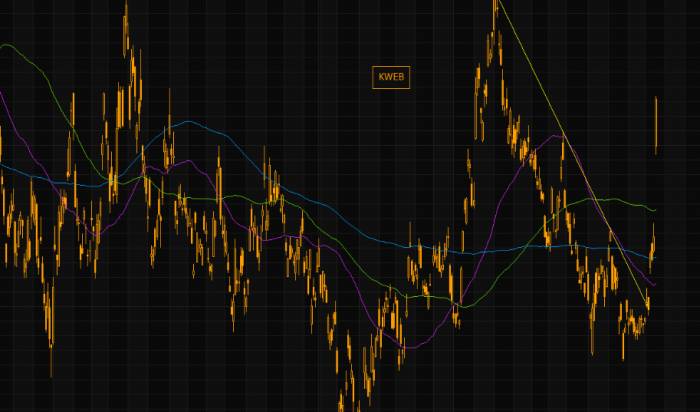
An important option is to quickly turn the Chinese stock market from a decline to an increase.
The rebound of the stock market can stimulate consumption and boost consumer confidence through a positive wealth effect; on the other hand, it can broaden the financing channels of listed companies and reduce corporate financing costs.
In addition, the long-term healthy development of the stock market is also conducive to doing a good job in big issues such as technology finance and pension finance.
The first suggestion is to increase the investment of government investment institutions such as the Social Security Fund Council in the stock market, especially to increase the investment in undervalued blue-chip leading stocks; the second is to consider issuing special government bonds to raise about 2 trillion yuan to establish a Chinese stock market stabilization fund.
At present, the Chinese stock market has made a lot of institutional improvements in corporate governance, strengthening supervision, and investor protection.
Once the market sentiment reverses under the guidance of government investors, the Chinese stock market may usher in a new wave of the market.
Of course, the two prerequisites for the stock market rebound are, first, the stabilization and rebound of the macroeconomic basic plate, second, the timely stop of the real estate market, and third, the implementation of reform signals.





























Share Your Comment
We'd love to hear about your experiences and questions