On September 24th, at a press conference held by the State Council Information Office, a policy "gift package" was announced by the "one line, one bureau, and one association."
Among these policies, the adjustment of the existing housing loan interest rates remains a focal point of attention.
The central bank governor, Pan Gongsheng, stated that commercial banks will be guided to reduce the interest rates on existing housing loans to a level close to that of newly issued loans, with an expected average decrease of about 0.5 percentage points.
This follows a regulatory expression over a year ago to uniformly lower the interest rates on existing housing loans, which is expected to benefit 50 million families and a population of 150 million, with an average annual reduction in household interest expenses of approximately 150 billion yuan.
Against the backdrop of continuous pressure on interest margins, the impact of the new policy on banks is also closely watched.
Integrating the views of industry insiders, the impact of the reduction in existing housing loan interest rates on bank interest margins is objectively present, but in terms of quantity, it helps to curb early repayments, alleviate the pressure on the scale and quality of retail assets, and the specific impact should also be comprehensively and dialectically viewed in conjunction with a series of incremental policies such as reserve requirement ratio cuts and interest rate reductions, with the overall impact being controllable.
Why the adjustment again?
As the second half of the year began, the call for another adjustment of the existing housing loan interest rates in the market has been growing increasingly loud.
Pan Gongsheng introduced the background of this adjustment at the press conference, stating that in August of the previous year, the People's Bank of China promoted commercial banks to orderly reduce the interest rates on existing housing loans, which were well received by the public and had good results.
On May 17th of this year, after the bottom line of the national housing loan interest rate policy was lifted, the reduction margin of the newly issued housing loan interest rates based on the Loan Prime Rate (LPR) was expanded, and the interest rate level significantly decreased, further widening the interest rate gap between new and old housing loans.
In response, the central bank plans to guide banks to make batch adjustments to the interest rates on existing housing loans, reducing them to a level close to that of newly issued housing loans.
Wang Qing, the Chief Macro Analyst at Orient Securities, believes that influenced by the significant 25 basis point cut in the 5-year LPR quote in February this year and the "5.17" real estate policy that canceled the national-level bottom line for housing loan interest rates, the interest rate on newly issued personal housing loans in July this year dropped to 3.4%, which is 87 basis points lower than the previously adjusted existing first-set housing loan interest rate, and other existing housing loan interest rate levels are even higher.
Moreover, the current yield on residents' investment and financial management is also significantly lower than the existing housing loan interest rate.
Affected by the relatively high interest rates on existing housing loans, the phenomenon of early repayments is quite noticeable at this stage, which has a significant negative impact on consumer spending and is an important reason for the slower growth in consumer spending this year.
He stated that for banks, the large-scale early repayment of housing loans by residents means the loss of high-yield, low-risk quality credit assets, especially against the backdrop of financial institutions generally facing an "asset drought," which would seriously erode bank profits.
More importantly, the continuous occurrence of large-scale early repayments would send a negative signal to the real estate market, which is not conducive to reversing market expectations and promoting the market stabilization and recovery.
There have also been calculations by some institutions in the market regarding the adjustment space of about 50 basis points.
Dai Zhifeng, the Chief Analyst of the Banking Industry at Zhongtai Securities, believes that without considering new adjustments to existing policies, combined with the 35 basis point cut in the LPR this year, by the beginning of 2025, the interest rate on existing housing loans may drop below 3.9%, while the interest rate on newly issued housing loans may be around 3.35%.
According to the People's Bank of China's fourth-quarter monetary policy implementation report in 2023, after the initiation of the adjustment of existing housing loan interest rates in September last year, more than 23 trillion yuan of existing first-set housing loan interest rates were reduced, accounting for 60% of the scale of existing housing loans at the end of 2023, with an average interest rate level reduction of 73 basis points, down to 4.27%, reducing the interest expenses of borrowers by about 170 billion yuan per year.
Pan Gongsheng stated that this adjustment of existing housing loans will benefit 50 million households and a population of 150 million, with an average annual reduction in the total interest expenses of households of about 150 billion yuan, which is conducive to promoting the expansion of consumption and investment, reducing the behavior of early repayments, and also compressing the space for illegal replacement of existing housing loans, protecting the legitimate rights and interests of financial consumers, and maintaining the stable and healthy development of the real estate market.
Pan Gongsheng revealed that the central bank will soon officially release documents, and banks will also need some time to make the necessary technical preparations.
He also pointed out: "The reason it is called an average is that loans are issued at different times, and the interest rate levels of existing housing loans issued at different times, in different regions, and by different banks are different."
He stated that the next step will be to further improve the housing loan pricing mechanism, with banks and borrowers negotiating autonomously and adjusting dynamically according to market principles.
Regarding the cross-bank mortgage transfer discussed in the market before, Pan Gongsheng revealed after the meeting that the transfer will first be implemented within the bank, and then consider whether cross-bank mortgage transfer is needed in the next step.
Dong Ximiao, the Chief Researcher at China United Network Communications, stated to the First Financial Daily that the centralized adjustment of existing housing loan interest rates is a special policy implemented in a special period and should not be normalized and implemented regularly.
Market authoritative experts also stated to the First Financial Daily that the central bank's expression also means that this will be the last time the policy side will uniformly lower the interest rates on existing housing loans.
What is the impact on banks?
What impact will the policy implementation have on banks?
Wang Qing stated that on the one hand, the reduction in existing housing loan interest rates will effectively curb the tide of early repayments, alleviate the impact on consumer spending, and release a positive signal for stabilizing the housing market, which is conducive to promoting the market stabilization and recovery.
On the other hand, as of the end of June, the scale of existing housing loans is 37.8 trillion yuan, and a 0.5 percentage point reduction in interest rates means that the bank's interest income will be reduced by 189 billion yuan a year, equivalent to about 8.2% of the total profit of the banking industry in 2023.
Dong Ximiao stated that after the centralized reduction of existing housing loan interest rates in September 2023, if the existing housing loan interest rates are concentrated again in 2024, it will inevitably affect commercial banks, especially large commercial banks with a high proportion of housing loans.
Moreover, if the LPR decreases by 0.2 percentage points, the interest rates for both existing and new housing loans will further decrease.
According to the previous calculation by Zhongtai Securities, under the condition of a 50 basis point reduction in the interest rate on existing housing loans, it will drag down the net interest margin of listed banks in 2025 by about 5.6 basis points, and the impact on revenue and pre-tax profit is about 3.1% and 7%, respectively.
Among them, large banks are the most affected, followed by joint-stock banks, rural commercial banks, and city commercial banks.
Regarding whether the reduction in the interest rate on existing housing loans can alleviate large-scale early repayments, there have also been different voices in the market before, one of the reasons being that the reduction in the interest rate on existing housing loans in September to October last year did not stop the downward trend of the balance of personal housing loans.
As of the end of June this year, the balance of personal housing loans decreased by about 610 billion yuan compared to September last year.
In response, Chongyang Investment pointed out in a report that on the surface, the speed of the decline in the balance of personal housing loans has accelerated within half a year after the reduction in the interest rate on existing housing loans.
In fact, this is the result of the decline in the transaction volume of new and second-hand houses, the further downward trend of risk-free interest rates, and the further deterioration of residents' risk preference and expectations.
If there was no reduction in the interest rate on existing housing loans last year, the decline in the balance of personal housing loans might be even greater.
In fact, from January to July this year, the credit of the resident sector only increased by 1.25 trillion yuan, a significant increase of 1.3493 trillion yuan year-on-year.
If the interest rate on existing housing loans is not reduced in time, there is also a risk of negative growth in the overall credit balance of the resident sector.
Regarding the impact on the interest margin, Wang Qing believes that the regulatory authorities will alleviate it by guiding commercial banks to orderly reduce deposit interest rates.
"As of the end of June, the balance of various deposits of commercial banks is 296.5 trillion yuan.
This means that if the average deposit interest rate is reduced by 6.4 basis points, it can offset the impact of the 50 basis point reduction in the interest rate on existing housing loans on bank profits.
This can alleviate the burden on families with housing loans while easing the squeeze on bank profits."
He stated in his report.
In fact, the package of financial support measures announced by the regulatory authorities is multi-dimensional, and the efforts in terms of reserve requirement ratio cuts and interest rate reductions also exceed expectations.
Pan Gongsheng stated that the reserve requirement ratio will be reduced by 0.5 percentage points in the near future, providing about 1 trillion yuan of long-term liquidity to the financial market; this year, depending on the condition of market liquidity, it may further reduce the reserve requirement ratio by 0.25 to 0.5 percentage points.
The policy interest rate of the central bank, that is, the 7-day reverse repo operation interest rate, will be reduced by 0.2 percentage points, adjusted from the current 1.7% to 1.5%, leading to adjustments in various market benchmark interest rates.
It is expected to lead to a reduction of about 0.3 percentage points in the medium-term lending facility (MLF) interest rate, and it is expected that the LPR and deposit interest rates will also fall by 0.2 to 0.25 percentage points.
Pan Gongsheng also further stated that the impact of this interest rate adjustment on the net interest margin of banks is generally neutral.
The reduction in the interest rate on existing housing loans will reduce the bank's interest income, but it will also reduce the customer's early repayments.
The central bank's reserve requirement ratio cut is equivalent to directly providing banks with low-cost, long-term funds for operation.
The medium-term lending facility and open market operations are the main ways for the central bank to provide medium and short-term funds to commercial banks, and the reduction in interest rates will also reduce the funding costs of banks.
In addition, it is expected that the loan market quotation rate and deposit interest rates will move down symmetrically.
At the same time, because the repricing of deposit interest rates is slower than that of loans, the repricing effects of the previous guidance for deposit interest rate reductions will also accumulate over time.
Dong Ximiao believes that since this year, with the continuous reduction of deposit interest rates and the effect of policies such as rectifying "manual interest supplementation," the funding costs of commercial banks have been reduced to some extent.
Comprehensive reserve requirement ratio cuts, policy interest rate reductions, and promoting further declines in deposit interest rates will further reduce the funding costs of banks, and it is expected that the net interest margin of commercial banks is expected to remain basically stable.
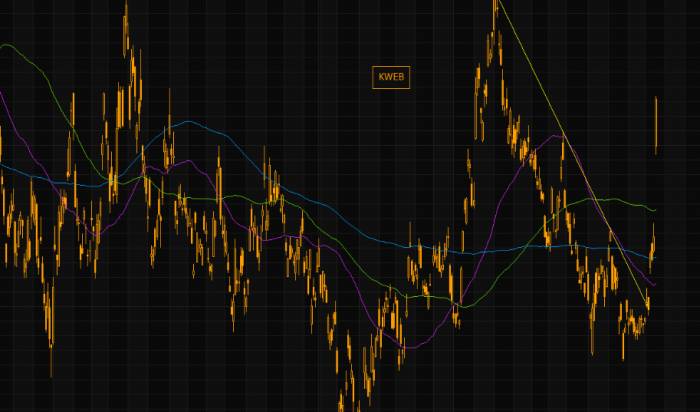
From the perspective of the secondary market, after the "one line, one bureau, and one association" made a strong voice, the A-shares opened collectively higher in the morning, continued to strengthen in the afternoon, and as of the close, the Shanghai Composite Index rose by 4.15%, closing at 2863.13 points, the Shenzhen Component Index rose by 4.36%, and the ChiNext board rose by 5.54%.
The total transaction amount of the Shanghai and Shenzhen markets was 971.3 billion yuan, setting a new high since May 20, increasing by 420.3 billion yuan compared to the previous trading day's 551 billion yuan, with 5,100 stocks rising in both markets.
Among the sectors, real estate fluctuated upwards, and the banking and other large financial sectors continued to strengthen.当然可以,不过您还没有提供需要翻译的内容。请提供您想要翻译的文本,我会帮您翻译成英文。




























Share Your Comment
We'd love to hear about your experiences and questions