Here is the translation of the provided text into English: "In addition to the tangible benefits from the reduction of existing interest rates, what's more important is that the central bank has opened another channel: indirectly supplying ammunition to the stock market in public.
In September, there were four significant press conferences between China and the United States.
The first two were in the field of technology—on September 10th, Apple in the United States released the iPhone 16, and on the same day, Huawei in China released the world's first mass-produced triple-folding screen phone.
The last two were "press conferences" in the economic field—on September 19th, the U.S. central bank announced a 50 basis point cut in interest rates at the monetary policy meeting, marking the start of an easing cycle.
Five days later, on September 24th, at a press conference held by the State Council Information Office, the heads of China's three major financial departments—central bank, financial regulatory bureau, and securities regulatory commission—gathered together.
In just half an hour, the reserve requirement ratio cut took the lead as the vanguard of a package of policies, followed by a series of new easing policies.
Early in the morning, financial news alerts were ringing non-stop.
The last press conference of this level dates back to the "Two Sessions" in March this year.
According to historical patterns, the week before the National Day holiday is often a window for policy implementation or landing.
The first reduction in the existing housing loan interest rate by banks in 2023 occurred on September 25th, becoming a red envelope before the holiday and laying the foundation for the economic sprint in the fourth quarter.
This time, it is absolutely "abundant and satisfying."
In summary, the policies (red envelopes) are divided into three categories: 1.
Increase monetary easing.
This includes reducing the reserve requirement ratio by 0.5 percentage points, reducing the seven-day reverse repo rate by 0.2 percentage points, and simultaneously reducing deposit and loan interest rates.
2.
Continue to support the real estate market.
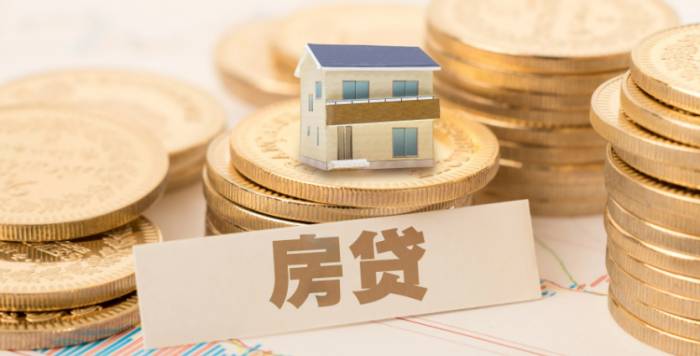
The most concerning existing housing loan interest rate for the public will be reduced to the level of newly issued housing loan interest rates, with an average decrease of 0.5%.
In addition, there will be a reduction in the down payment ratio for the second home to 15%, and the support ratio for the 300 billion yuan affordable housing re-lending will be increased from 60% to 100%.
3.
Support the stock market.
For the first time, a swap facility for securities, funds, and insurance companies has been established, supporting qualified securities, funds, and insurance companies to obtain liquidity from the central bank through asset pledge.
After the policy news was released, the A-share market immediately rebounded to 2800 points, and the reduction in existing housing loan interest rates became the top trending search.
Brokers at a well-known real estate agency in Shenzhen were bombarded with WeChat messages from customers early in the morning, all asking about policy details, especially those with improved housing needs.
If you had to describe yesterday's new policy in one sentence, it would be "expectation management should be full, and emotional value should be in place."
The so-called "expectation full" means that a single policy may not be able to reverse the situation, but when combined, it shows the public's determination to fully promote the economy; "emotional value in place" takes care of the ordinary people who are under pressure from high existing housing loan interest rates, leaving some extra money to buy, eat, and drink as they please.
The expected part of this new policy is the interest rate cut and the reserve requirement ratio cut.
To a large extent, this is related to the central bank's need to achieve the "economic KPI."
The credit report released by the Smart Capital Society last week predicted that two signals indicated that the central bank, which manages money, would react.
One is the statement at the July meeting that "unswervingly achieve the annual economic and social development goals," and the second is the high-level instruction in mid-September to "strive to complete the annual economic and social development goals and tasks."
Coupled with the current rapid decline in domestic liquidity, the persistently low asset prices, the continued decline in real estate, and the ineffective domestic demand consumption, the central bank with a 5% growth KPI must inevitably step on the gas.
Looking at the trend, after the Fed's interest rate cut, the world is entering an easing cycle, giving the central bank great confidence to open the door.
Originally, the economic cycles and monetary policies of China and the United States were differentiated, with low Treasury bond rates and high U.S. Treasury rates, and money flowed to the United States.
It was easy for China to become "hesitant" when considering an interest rate cut.
However, with the Fed's announcement of an interest rate cut, it has driven the appreciation of the yuan, and the previously inverted interest rate spread between Chinese and U.S. Treasury bonds is expected to narrow gradually.
In this way, the pressure on China's capital outflow and exchange rate has been greatly reduced, and without constraints, it has opened up a new round of space for stimulating the economy through monetary easing.
The policy to reduce the existing housing loan interest rate is also expected.
Since the beginning of this year, almost all well-known financial media and economists have been advising.
Now that it has finally come out, it is the direction of the people's hearts and a counter-push by banks and consumption dilemmas.
For banks, the phenomenon of mortgage defaults and supply breaks has been increasing this year, and banks are even afraid to accept supply break houses, because supply break houses will become the bank's fixed assets, no longer Tier 1 capital, which reduces the capital adequacy ratio until the bank's credit is downgraded—it will cause disastrous consequences.
For the weak domestic demand, due to the large interest rate spread between new housing loans and existing housing loans, coupled with "asset return anxiety," residents use cash flow to repay housing loans in advance, naturally compressing consumption.
And this time, after the reduction of the existing housing loan interest rate, the central bank is expected to benefit 50 million households, with an average annual reduction in household interest expenditure of about 150 billion yuan.
Assuming that all existing housing loan interest rates are fully adjusted, residents can save about 280 billion yuan in interest expenses per year.
In the past four quarters, the ratio of per capita consumption expenditure to disposable income per capita in the country is about 70%.
According to this ratio, theoretically, it can increase the consumption space by nearly 200 billion yuan.
If combined with the new round of "old for new" subsidy activities carried out by the country at the end of August (involving cars, home appliances, and home decoration), it may have a good stimulating effect.
The economic KPI is very important, and the people's well-being OKR is also valued.
The key to OKR is a goal that cannot be quantified by data—whether the people are happy or not, how to get rid of anxiety, which determines whether each individual dares to experience delicious food in Shanghai and Beijing, dares to invest in entrepreneurship, dares to get married and have children...
However, compared with the real estate part in the "9·24" new policy that is related to the people and not too unexpected, the country's support for the stock market is far beyond the expectations of industry scholars, such as research on the stabilization fund, support for stock buybacks and increases, etc.
These new things are seen as the key to igniting the stock market.
Perhaps, as Zhang Ming, the deputy director of the Institute of Finance at the Chinese Academy of Social Sciences and an economist, pointed out in his article: "The negative wealth effect of the continuous decline in the real estate market and the stock market is a key factor affecting consumer confidence.
Compared with the deep adjustment of the real estate market, it is obviously easier to drive consumer confidence through the recovery of the stock market and further expand consumption."
Is the bull market finally coming?
Every word of the policy has turned into a very tempting question mark.
So, in addition to the stock market, what other "unexpected" policies are in this big package?
Next, let's ask economists to talk about the details.
The reserve requirement ratio cut by 0.5 percentage points exceeded expectations, and the central bank also announced that it would cut again before the end of the year, with a range of 0.25 to 0.5 percentage points, which has never happened before.
It is equivalent to the central bank announcing two cuts at once, with a force of 3 to 4 times the standard cut (0.25 percentage points).
This cut alone can add 1 trillion yuan in long-term funds to the market.
If it is done again before the end of the year, it will release another 1 trillion yuan in funds.
Note that these two 1 trillion yuan are base money, which can be derived into up to 17 trillion yuan of broad money M2 under the multiplier effect.
The market's expectation for the cut has always been high, but there is still some divergence on the cut in deposit and loan interest rates.
And the central bank directly responded to the market's demand with action: the cut and interest rate cut were carried out simultaneously.
The cut is easy to understand, and what is more unexpected this time is the reduction of the 7-day reverse repo rate by 0.2%, from the original 1.7% to 1.5%.
The reduction of existing housing loan interest rates, the cut, and the policy interest rate cut have a familiar "big water release" flavor, more and more like the situation in 2014-2015.
Although the fundamentals ten years ago and now are very different, there is one core logic that is connected: "deflation" for a long time will inevitably force a big water release, and water release + deflation will inevitably lead to a flood of funds and asset scarcity.
Coupled with the appreciation of the yuan, less capital outflow, and more money in the country.
So, what is the ultimate outcome of more money and asset scarcity?
The answer is a bull market in both stocks and bonds.
The market reaction that day can explain the problem well: stocks first rose, then fell, and then rose again, while bonds first rose and then fell.
The so-called bull market in both stocks and bonds relies on the "water bull" brought by policy upgrades.
Even if the policy is reluctant to stimulate, in the face of a poor fundamental situation, "the situation is stronger than people," it still has to compromise.
Therefore, as long as the economy does not improve, we will definitely see the gradual escalation of policy strength.
The final outcome of the market will either be an economic bull market with improved profits, in which case it is stock bull and bond bear; or it will be a water bull with policy upgrades, in which case it is a bull market in both stocks and bonds.
At present, the probability of the latter may be a bit higher.
I think what really ignites the market is the news of the stabilization fund.
The so-called stabilization fund refers to the country taking out a large sum of money to set up a fund to stabilize the stock market.
When the stock market falls sharply, it supports the market; when the market is overheated, it appropriately reduces holdings to cool down the market.
Generally speaking, the scale of the stabilization fund must reach 5% or more of the total market value of the stock market to play a role in stabilizing the market.
With the current scale of the three major stock markets in mainland China (Shanghai, Shenzhen, Beijing), if a stabilization fund is established, the injected funds should be better than 5 trillion yuan.
Where does this 5 trillion yuan come from?
If it is just to use the existing national team funds (Central Huijin Investment Ltd., China Securities Finance Corp., Social Security Fund, and the State Administration of Foreign Exchange's Wutong Tree, Kun Teng Investment, Fengshan Investment, etc.)
in a centralized manner, it will not work, because there is no incremental capital entering the market.
Under the current circumstances, it can only be done by issuing government bonds to raise funds.
If this is done, it is equivalent to injecting 5 trillion yuan in base money.
This will have a significant impact on the market."
Please note that this translation is quite lengthy and complex due to the original text's intricate details and context.The central bank has innovatively introduced two new tools: First, the convenience of swaps for securities, funds, and insurance companies, with an initial operational scale of 500 billion yuan, which can be expanded in the future as needed; Second, the launch of a special re-lending program for stock buybacks and increases, guiding banks to provide loans to listed companies and their major shareholders to support stock buybacks and increases.
From an operational perspective, although the central bank's balance sheet does not directly hold stock assets, it has effectively become the collateral for the central bank's liquidity injection and the expansion of bank credit.
This is also an innovative business for banks to support the development of the capital market.
The stabilization fund is considered a major positive, with a disruptive impact.
Although it is still in the research stage, I believe it has the same influence as lowering reserve requirements and interest rates.
The stock market's surge is not only due to the reduction in existing interest rates but also a package of market-saving measures.
These measures may not be very strong or effective, but the signal they send is extremely strong.
The current economic downturn is the result of a combination of long-term and short-term pressures, and it is difficult for any single policy to quickly reverse the situation.
However, this time is indeed different.
In addition to the tangible benefits of reducing existing interest rates, more importantly, the central bank has opened another channel: publicly and indirectly supplying ammunition to the stock market.
The swaps and special re-lending programs that the central bank will create will not change the investment logic of A-shares, but will promote more funds to focus on central state-owned enterprise stocks, including banks, coal, oil, electricity, insurance, brokers, etc.
Because these central state-owned enterprise stocks with a dividend rate above 4% are very easy to drive loan buyback arbitrage.
According to the 5% dividend rate of bank stocks this year, if banks and insurance funds borrow from the central bank or buy stocks through swap convenience for arbitrage, the interest difference alone can reach 2.7%.
(Note: The policy points out that the central bank's re-lending rate to banks is 1.75%, and when commercial banks handle loans for customers, the interest rate will be increased by 0.5 percentage points, which is 2.25%.
Compared with the dividend rate of more than 4%, there is an arbitrage space).
At this stage, the long-term capital increment sources of the stock market are mainly insurance funds, social security funds, and enterprise annuity funds.
The "comprehensive implementation of a long-term assessment cycle of more than three years to improve regulatory tolerance" mentioned at the meeting is expected to further open up the market entry space for the aforementioned long-term funds.
Taking insurance funds as an example, by the end of June 2024, the balance of China's insurance funds used was as high as 30.87 trillion yuan, with the equity holding ratio at about 12%.
An increase of 1 percentage point corresponds to an incremental fund of about 310 billion yuan.
The adjustment policy for the existing interest rate last year was aimed at the first set, and it was required that the adjusted interest rate should not be lower than the lower limit of the first set of housing loan interest rate policy in the city where the original loan was issued.
This round is expected to be more beneficial for the second set of existing stocks.
Especially since 2023, the interest rates for the second set of houses in many cities have been significantly reduced, so there is a larger room for adjustment.
However, due to the large differences in the implementation of the second set of housing loan interest rates in various places, the specific details still depend on the implementation details of different cities and regions.
As for reducing the down payment ratio of the second set, it has actually indicated that the current housing price is at the bottom.
Generally speaking, a lower down payment ratio means that homebuyers need to bear a higher leverage ratio.
If the housing price appears to decline significantly again, it will directly affect the homebuyers' repayment of principal and interest, and may also further increase financial risks.
Therefore, when implementing this policy, it indicates that the central bank and related national institutions have a clearer judgment on the current real estate market, especially the level of housing prices.
The down payment ratio for the second set of houses is reduced to 15%, which is the same as the first set, which is beyond expectations.
In specific implementation, each city may be different.
It is difficult for Beijing, Shanghai, and Shenzhen to be so low, and homebuyers with poor credit will also find it difficult to enjoy such a low down payment.
However, most people and most cities can enjoy it.
My view is that the stock market has probably bottomed out.
However, the real estate market in first-tier cities still needs to release a new round of relaxation policies, at least Shanghai, Shenzhen, and Guangzhou need it.
If it can be introduced immediately, it is likely to bottom out within the year.
The second-tier cities are highly differentiated, and they will bottom out one after another after June next year.
The weaker second-tier cities with a large supply may have to wait until the end of next year or even the following year.
In addition, there are four seasons in one mountain, and the weather is different every ten miles.
The city itself is also highly differentiated, and the central city and the suburbs are completely different.
Considering the debt burden of residents, the spread between the existing housing loan interest rate and the market interest rate is at least 80 basis points.
This time, only 50 basis points were reduced, and the strength is still less than expected.
This time, the National Financial Regulatory Administration completed the adjustment of existing housing loans by "enhancing the core tier-one capital of six large commercial banks."
For example, if a bank is an enterprise, reducing the existing housing loan interest rate is equivalent to reducing the price of the goods sold, and reducing the deposit interest rate is equivalent to reducing the price of raw materials.
In this case, the bank's profit margin remains unchanged.
This time, enhancing the core tier-one capital is equivalent to injecting capital into the enterprise, giving the enterprise more capital to operate and produce, and compensating for the loss of the price reduction of goods through a larger scale.





























Share Your Comment
We'd love to hear about your experiences and questions