The central bank's policies include: reducing the reserve requirement ratio by 0.5 percentage points, releasing about 1 trillion yuan of long-term liquidity to financial institutions; lowering the average interest rate on existing housing loans by 0.5 percentage points; creating two structural monetary policy tools with an initial quota of 800 billion yuan to provide liquidity support to the stock market... One week before the "Eleventh" holiday, the People's Bank of China (hereinafter referred to as "the central bank") officially announced the introduction of a package of incremental monetary policies.
At 9 a.m. on September 24, the central bank, the State Financial Regulatory Administration, and the China Securities Regulatory Commission, the three major financial regulatory authorities, gathered at the press conference of the State Council Information Office.
In this unusual press conference, Pan Gongsheng, the governor of the central bank, announced three major supportive monetary policy measures.
First, the total amount of reserve requirement ratio reduction and interest rate cut.
The reserve requirement ratio was reduced by 0.5 percentage points, releasing long-term funds of about 1 trillion yuan.
The main policy interest rate for 7-day reverse repo operations was reduced by 0.2 percentage points, from 1.7% to 1.5%, while guiding the LPR (loan prime rate) and deposit interest rates to move downward synchronously, maintaining the stability of commercial banks' net interest margins.
Second, five policies to support the real estate market.
This includes guiding commercial banks to reduce the interest rates on existing housing loans to near the interest rates of newly issued loans, with an expected average reduction of about 0.5 percentage points, benefiting 50 million households, with an average annual reduction in total family interest expenditure of about 150 billion yuan; unifying the minimum down payment ratio for the first and second housing loans at the national level to 15%, allowing localities to implement policies based on the city, etc.
Third, the creation of "Securities, Fund, and Insurance Company Swap Facilities" and "Special Re-lending for Share Buybacks and Increases," supporting the stock market.
Among them, the "Securities, Fund, and Insurance Company Swap Facilities" support qualified securities fund insurance companies to obtain liquidity from the central bank through asset pledge; the "Special Re-lending for Share Buybacks and Increases" guides banks to provide loans to listed companies and major shareholders, supporting share buybacks and increases.
The initial quotas for the two tools are 500 billion yuan and 300 billion yuan, respectively, and can be expanded in the future depending on the situation.
"The first phase is 500 billion yuan, and we can have another 500 billion yuan, or even a third 500 billion yuan; the first phase is 300 billion yuan, and we can have another 300 billion yuan, or even a third 300 billion yuan, all of which are possible," said Pan Gongsheng.
Pan Gongsheng said that the central bank's monetary policy adjustments mainly consider four factors: first, to support the stable growth of China's economy, second, to promote a moderate rebound in prices, third, to take into account the support for the growth of the real economy and the health of the banking industry, and fourth, to maintain the basic stability of the RMB exchange rate at a reasonable and balanced level.
In addition, the central bank focuses on the coordination of monetary policy and fiscal policy, supporting active fiscal policy to better exert its effectiveness.
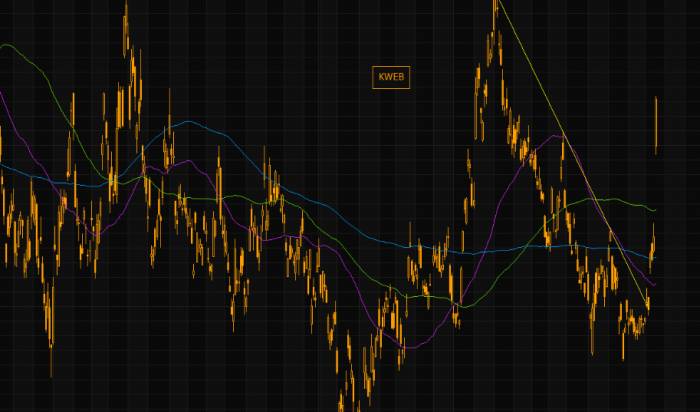
With the aforementioned press conference, A-shares and Hong Kong stocks opened high and went higher.
As of the closing on the afternoon of the 24th, the main indices of A-shares and Hong Kong stocks all rose by more than 4%, with the Shanghai Composite Index and Shenzhen Component Index rising by 4.15% and 4.36% respectively; the Hang Seng Index rose by 4.13%.
At the same time, government bond futures fell rapidly, with the main contract of 30-year government bond futures falling by 1.25% at one point, and the main contract of 10-year government bond futures falling by 0.37% at one point, indicating that the market's expectations for future macroeconomic prosperity have improved.
Five policies support real estate: monthly mortgage payments for a million yuan are reduced by about 300 yuan.
In the newly announced policies, the market has long been looking forward to the reduction of existing housing loan interest rates.
As of the end of the second quarter of 2024, the national balance of personal housing loans was 37.79 trillion yuan, and the weighted average interest rate for newly issued housing loans was 3.45%.
According to estimates by Nomura China and other institutions, the current interest rate spread between existing and new housing loans is about 90BP-130BP (basis points, 1BP=0.01%).
Pan Gongsheng said that commercial banks will be guided to reduce the interest rates on existing housing loans to near the interest rates of newly issued loans, and it is expected that the average reduction of existing housing loan interest rates this time will be about 0.5 percentage points, benefiting 50 million households and 150 million people, with an average annual reduction in total family interest expenditure of about 150 billion yuan.
According to Yan Yuejin, deputy dean of the Shanghai Yiju Real Estate Research Institute, taking a loan principal of 1 million yuan and a 30-year equal principal and interest repayment method as an example, the monthly mortgage payment can be reduced by about 300 yuan after this reduction.
"The reason why it is said to be an average is that the loans were issued at different times, and the interest rates on existing housing loans issued at different times, in different regions, and by different banks are different, and our predicted reduction is an expected average."
Pan Gongsheng said that one of the backgrounds for the introduction of the policy to reduce the interest rates on existing housing loans this time is the expansion of the interest rate spread between existing and newly issued housing loans.
The pricing of mortgage loans is mainly based on the LPR plus or minus points, and the points are usually fixed after determination.
On May 17 this year, the central bank announced the cancellation of the national housing loan interest rate policy floor, and the reduction points on the newly issued loans based on the LPR were expanded, and the interest rate level dropped significantly, once again widening the interest rate spread between old and new housing loans.
Especially in big cities like Beijing, Shanghai, Shenzhen, and Guangzhou, the original addition points were relatively high, and after the adjustment on May 17, the interest rate spread between the newly issued mortgage loans and the original existing mortgage loans became larger.
"Affected by the relatively high interest rates on existing housing loans, the phenomenon of early repayment of loans is quite obvious at this stage, and the average early repayment rate of RMBS in June reached 19.3%, which is significantly higher than the 12.9% of the same period last year."
Wang Qing, chief macro analyst at Orient Gold Research, said, "This has already had a significant negative impact on residents' consumption and is an important reason for the slower consumption growth this year."
Therefore, following the batch reduction of the average interest rates on existing housing loans by 0.73 percentage points at the end of August 2023, the central bank announced that it would guide the reduction of the interest rates on existing housing loans again.
"This helps to promote the expansion of consumption and investment, and is also beneficial to reduce the behavior of early repayment of loans, while also compressing the space for illegal replacement of existing housing loans, protecting the legitimate rights and interests of financial consumers, and maintaining the stable and healthy development of the real estate market."
Pan Gongsheng said.
At the same time, Pan Gongsheng mentioned that the next step is to consider guiding commercial banks to improve the pricing mechanism of mortgage loans, and both banks and customers will autonomously negotiate and adjust dynamically based on market-oriented principles.
Previously, the market had a lot of discussions on the cross-bank transfer of existing housing loans, believing that this is one of the feasible ways to reduce the interest rates on existing housing loans and to adjust them dynamically.
The so-called cross-bank transfer of mortgage loans refers to transferring housing mortgage loans from one bank to another through means such as guarantees by guarantee companies, and adjusting the mortgage loan interest rate to the latest market level.
Around 2007, some banks had introduced "transfer mortgage" loans, but due to factors such as preventing real estate bubble risks, the relevant products were stopped by regulatory authorities.
According to the "Securities Times," Pan Gongsheng said that for the cross-bank transfer of existing housing loans, the initial implementation will be within the bank, and the next step will consider whether cross-bank transfer is needed.
It is worth noting that the specific plan for the reduction of deposit mortgage interest rates has not yet been released.
Pan Gongsheng said that this adjustment involves many borrowers, and banks also need a certain amount of time for the necessary technical preparation, and the central bank will officially release the relevant documents in the near future.
In addition to reducing the interest rates on existing housing loans, Pan Gongsheng also announced four other real estate financial policies at this press conference.
First, the national level of commercial personal housing loans will no longer distinguish between the first and second houses, and the minimum down payment ratio will be unified to 15%.
Second, extend the term of two real estate financial policy documents.
The "Financial 16 Articles" and the business property loan policy jointly issued by the central bank and the financial regulatory authority, the term was extended from December 31, 2024, to December 31, 2026.
Third, optimize the policy of re-lending for affordable housing.
In the 300 billion yuan of affordable housing re-lending, the central bank's contribution ratio was increased from the original 60% to 100%, that is, for every 10 billion yuan of loans issued by commercial banks, the central bank provides 10 billion yuan of low-cost funds.
Fourth, support the acquisition of real estate companies' existing land.
On the basis of using some local government special bonds for land reserves, research is being conducted to allow policy banks and commercial banks to provide loans to support qualified enterprises to acquire real estate company land in a market-oriented manner, activate existing land, and alleviate the financial pressure of real estate companies.
When necessary, the central bank can also provide re-lending support.
The combination of reserve requirement ratio reduction and interest rate cut: releasing trillions of long-term liquidity.
At the same time as the official announcement of the reduction of existing housing loan interest rates and other real estate financial policies, the central bank has increased liquidity support from the total amount level.
First, reduce the reserve requirement ratio by 0.5 percentage points, releasing about 1 trillion yuan of long-term liquidity to financial institutions.
This is the second time the central bank has reduced the reserve requirement ratio by 0.5 percentage points this year after the reduction in February.
Currently, the weighted average reserve requirement ratio for Chinese financial institutions is 7%.
Among them, large and medium-sized banks are 8.5% and 6.5%, respectively, and after this reduction, they will be reduced to 8% and 6%, respectively.
Rural financial institutions have previously implemented 5%, and this time they will not be adjusted.
After the implementation of the reserve requirement ratio policy, the average reserve requirement ratio for the banking industry is about 6.6%.
Pan Gongsheng said that this level still has a certain space compared with the central banks of the main economies in the world.
Before the end of the year, depending on the market liquidity situation, the central bank may further reduce the reserve requirement ratio by 0.25 to 0.5 percentage points.
Second, reduce the policy interest rate, and reduce the 7-day reverse repo operation interest rate by 20BP, from 1.7% to 1.5%.
In July of this year, the central bank reduced this interest rate from 1.8% to 1.7%.
Currently, the 7-day reverse repo operation interest rate in the open market is the main policy interest rate of the central bank, and its adjustment will drive the adjustment of various market benchmark interest rates.
It is expected that after this adjustment of the policy interest rate, the medium-term lending facility (MLF) interest rate will be reduced by about 30BP, and then guide the LPR, deposit interest rates, etc., to move downward by 20BP-25BP.From an internal demand perspective, this year's financial data has been generally weak, with residents showing a reluctance to leverage and actual interest rates remaining high in an environment of low inflation readings.
A significant interest rate cut would help to strengthen counter-cyclical adjustments.
Looking at the external environment, after the Federal Reserve's rate cut, the interest rate differential between China and the US has gradually narrowed, while the overall strength of the RMB has eased the constraints on monetary easing for the purpose of stabilizing the exchange rate, leaving more room for China to cut interest rates.
Ming Ming, the Chief Economist at CITIC Securities, stated this.
In previous discussions about the adjustment of existing mortgage interest rates, the impact on commercial banks has also been a key focus of market attention.
As of the end of the second quarter of 2024, the net interest margin of commercial banks was 1.54%, down 20BP year-on-year, reaching the lowest level since records began.
According to earlier estimates by Lin Yingqi, an analyst at CICC, if the average interest rate on existing mortgages is reduced by about 60BP, it will affect the bank's net interest margin by 7BP, operating income by 4%, and net profit by 7%.
In response, Pan Gongsheng said that the overall impact of this interest rate adjustment on the bank's net interest margin is expected to remain neutral.
On the one hand, lowering the interest rates on existing mortgages will reduce the bank's interest income, but it will also reduce the early repayments by customers.
On the other hand, the central bank's reserve requirement ratio cut is equivalent to directly providing banks with low-cost long-term funds, while MLF and open market operations are the main ways for the central bank to provide medium and short-term funds to commercial banks.
The decline in interest rates will also reduce the cost of funds for banks.
In addition, it is expected that this time the LPR and deposit interest rates will move downward symmetrically, and with the deposit interest rate self-regulation mechanism guiding deposit rates downward multiple times before, the effect of deposit repricing will gradually emerge over time.
Wang Qing calculated that if the average deposit interest rate is reduced by 6.4BP, it can offset the impact of a 50BP reduction in existing mortgage interest rates on bank profits.
"In the design of the policy adjustment plan, the central bank's technical team has conducted multiple rounds of serious quantitative analysis and assessment, and the impact of this interest rate adjustment on bank earnings is neutral, and the bank's net interest margin will remain basically stable," said Pan Gongsheng.
Two new tools support the stock market: a total of 800 billion yuan for the first phase.
At the press conference, the central bank announced the creation of two structural monetary policy tools aimed at supporting the stable development of the capital market and boosting investor confidence.
Pan Gongsheng said that this is also the first time the central bank has innovated structural monetary policy tools to support the capital market.
The first tool is the "Securities, Funds, and Insurance Companies Swap Facility".
It is reported that this tool will support qualified securities, funds, and insurance companies to obtain liquidity from the central bank through asset pledge.
At the same time, the funds obtained through this tool can only be used for investment in the stock market.
Specifically, the aforementioned financial institutions can use their holdings of bonds, stock ETFs, and constituents of the CSI 300 as collateral to exchange for high-liquidity assets such as government bonds and central bank bills from the central bank.
"Many institutions have assets, but the liquidity is relatively poor under current circumstances.
By swapping with the central bank, they can obtain higher quality and more liquid assets, which will greatly enhance the capital acquisition and stock increase capabilities of the relevant institutions," said Pan Gongsheng.
The second tool is the "Stock Buyback and Increase Re-lending".
This tool guides commercial banks to provide loans to listed companies and major shareholders for the repurchase and increase of listed company stocks.
In specific operations, commercial banks issue such loans to listed companies and major shareholders, and the central bank correspondingly issues re-lending to commercial banks.
For this re-lending, the central bank's funding support ratio is 100%, the re-lending interest rate is 1.75%, and the loan interest rate issued by commercial banks to customers is around 2.25%.
At the same time, this tool is applicable to listed companies of different ownerships such as state-owned enterprises, private enterprises, and mixed-ownership enterprises, without distinguishing between ownerships.
Pan Gongsheng said that the first phase of the "Securities, Funds, and Insurance Companies Swap Facility" and the "Stock Buyback and Increase Re-lending" tools are 500 billion yuan and 300 billion yuan respectively.
If used well, the scale can be expanded in the future.
After the aforementioned package of incremental policies was released, A-shares and Hong Kong stocks continued to rise.
As of 2 pm, the Shanghai Composite Index of A-shares rose by more than 3.7%, the Shenzhen Component Index rose by more than 3.9%, and the ChiNext Index rose by more than 5%; the Hang Seng Index of Hong Kong stocks rose by about 3.8%, and the Hang Seng China Enterprises Index rose by about 4.7%.
Wind (Wangde) data shows that on that day, the diversified financial industry index rose by more than 8%, and the industry indexes of liquor, securities firms, steel, insurance, and petrochemicals rose by more than 5%.
At the same time, the two monetary policy tools to stabilize the capital market also sparked some discussions.
Does this move by the central bank mean a large-scale release of funds?
In response, Wen Bin, the Chief Economist of Minsheng Bank, said that the "Securities, Funds, and Insurance Companies Swap Facility" is a swap form of support for securities, funds, and insurance companies, and it is highly likely to be an equivalent swap.
It is expected that this tool will not affect the scale of the central bank's balance sheet and is not a policy tool for large-scale issuance of base money.
"Both tools help inject liquidity into the equity market and improve market expectations, but they are not essentially the central bank directly purchasing assets in the equity market, so there is an essential difference from Japan's QQE (i.e., quantitative and qualitative monetary easing with negative interest rates)," said Ming Ming.
"It is expected that as the equity market support tools created by the central bank are implemented, the stock market expectations may further improve, and the central bank's ability to guide and manage the market will gradually increase."




























Share Your Comment
We'd love to hear about your experiences and questions